
Why fit matters first
If you are comparing noise cancelling wireless earbuds, start with fit before features. A strong ANC spec means little if the earbuds leak sound, shift during movement, or create pressure you cannot wear for more than 20 minutes. Fit affects isolation, bass response, call quality, and how often you will actually use them. The practical goal is simple: a pair that seals well without feeling forced. A secure fit also changes how consistent the noise cancellation feels from one listening session to the next. Even a slight seal shift can let in low-frequency hum from trains, office HVAC, or airplane engines, which makes ANC seem weaker than it really is. That is why two people can review the same model very differently: one gets an airtight fit and hears dramatic quiet, while another gets a loose seal and notices only modest improvement. Ear shape matters more than many buyers expect. Some earbuds suit shallow ear canals and concha shapes, while others depend on deeper insertion to work well. Silicone tip sizes are only part of the equation; nozzle angle, shell size, and stem length all influence comfort and stability. If an earbud sits too far out, it may feel fine while standing still but loosen during chewing, walking, or head movement, which can break both comfort and isolation. Testing fit in real conditions is more useful than judging it for a minute at a desk. Try them while talking, turning your head, climbing stairs, or wearing glasses and a mask if that is part of your routine. These small movements reveal pressure points and slipping much faster than a static try-on.
What the right fit changes
A good seal gives noise cancelling wireless earbuds the foundation they need to work properly. Even premium noise cancellation struggles when the ear tip is too small or the shell does not sit flush in the concha. That is why the same model can sound excellent for one person and thin or uneven for another. Fit also changes stability during walking, commuting, and workouts, so comfort and isolation need to be judged together.
Start with your ear shape, not the spec sheet
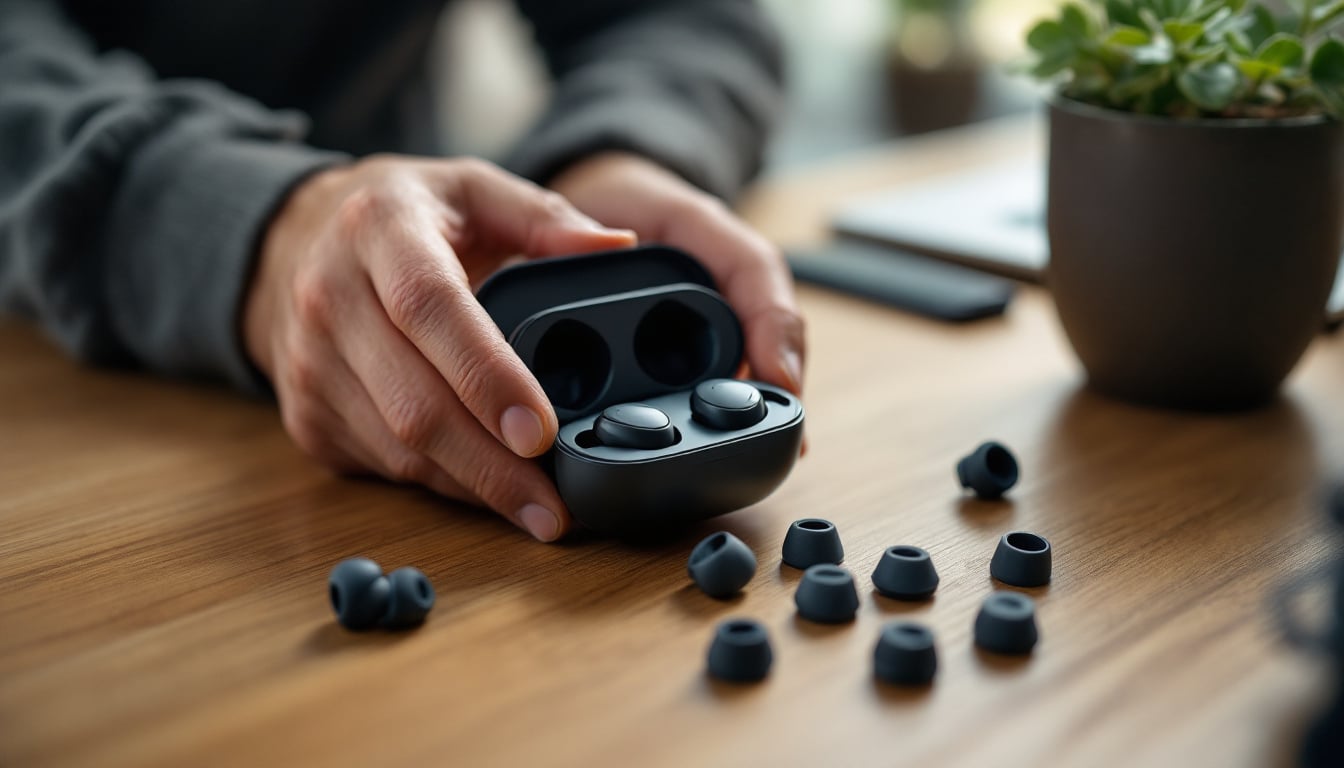
Ear canals vary more than most product pages admit. Some are shallow and need a shorter nozzle, while others need deeper insertion to seal properly. If you have used earbuds before, remember which models felt secure and which caused pressure points after 30 minutes. That history is more useful than a feature list because it tells you whether you should prioritize compact shells, angled stems, or softer silicone tips.
Match the earbud shape to your use
The best noise cancelling wireless earbuds for desk use are not always the best for travel or exercise. Stem-style designs often sit more predictably and make microphone placement easier, while stemless buds can feel less noticeable but sometimes rotate more easily. If you wear earbuds for long calls, check whether the shell sits outside the ear without pressing the tragus. For movement, prioritize low wobble over minimal profile.
Choose the right ear tips
Ear tips do most of the work. Silicone tips are the default because they are durable, easy to clean, and usually comfortable for mixed daily use. Foam tips can seal more aggressively, which helps if you want stronger passive isolation, but they need replacement sooner and can feel warmer. A practical approach is to test two sizes around your usual fit, then keep the one that seals without creating a vacuum effect.
How to check seal and stability
Before you decide on noise cancelling wireless earbuds, run a quick seal test. Insert the earbuds, play low-level music, and walk around a quiet room. If vocals sound hollow, outside noise comes through too easily, or you need to push the buds back in every few minutes, the fit is wrong. A good fit should stay stable with jaw movement, because talking and chewing often reveal weak sealing faster than standing still.
Sound and ANC performance only work after fit
People often compare ANC ratings before checking comfort, but the order should be reversed. Noise cancelling wireless earbuds need a physical seal first, then active cancellation fine-tunes the low-frequency noise. That is why one pair may reduce engine rumble well but still let in voices, while another feels quieter overall. The decision rule is straightforward: if the earbuds do not seal comfortably, do not expect the ANC to make up for it.
Battery life and charging details that affect daily use
Battery claims matter most when they match your routine. If you commute, take calls, and use ANC for several hours, look at both single-charge playback and total case power. Fast charging is useful if you often top up between meetings, and a case with a clear charge indicator can prevent surprise dead batteries. Some models, including Soundwavez Wireless Earbuds, add a visible power display, which is practical when you want a quick check before leaving home.
Noise cancelling modes that are worth paying attention to
Not all ANC modes are equally useful. A strong default mode is important, but transparency mode can matter just as much if you move between conversations, transit, and street crossings. Some noise cancelling wireless earbuds let you adjust intensity levels, which is helpful if full cancellation feels too sealed or causes mild pressure. Look for a model that gives you options instead of forcing one setting for every environment.
Calls, microphones, and wind noise
If you take calls outside, microphone quality deserves more attention than many buyers give it. A secure fit helps because loose earbuds shift when you speak, which changes mic pickup and creates handling noise. Wind reduction also matters if you walk outdoors often. The useful trade-off is this: the smallest earbuds are not always the best for calls, because a slightly larger stem or mic array can improve voice pickup and consistency.
Water resistance and workout reality
For gym use or rainy commutes, check the IP rating rather than assuming all wireless earbuds are similar. Sweat resistance is enough for some users, but if you train often, you want earbuds that tolerate repeated moisture exposure and still keep a stable seal when you move. A secure fit matters more here than glossy product claims, because even a strong ANC model becomes annoying if you keep reseating it during sets or runs.
Comfort testing in the first 30 minutes
The first few minutes can be misleading. Many noise cancelling wireless earbuds feel fine at first and then start pressing on the antihelix or inner canal after a short session. Test them in three stages: sit still for ten minutes, walk for ten minutes, then talk or chew for a few minutes. If discomfort starts during stage two or three, the shape is probably wrong even if the sound is good.
A simple buying workflow that avoids regret
Use a three-step workflow before buying. First, decide where you will wear the earbuds most often, because commute, office, and workout use have different fit needs. Second, compare shell shape, tip options, and battery life against that routine. Third, confirm the return policy in case the seal is poor after real-world testing. That final step matters because fit cannot be judged properly from photos alone. When you map the purchase to a specific routine, the tradeoffs become easier to see. A commuter may value stronger passive isolation and a compact case that slips into a pocket, while an office user may care more about comfort over long sessions and reliable microphone clarity for calls. A gym-focused listener often needs a secure fin or wing, sweat resistance, and controls that still work with damp hands. Matching the product to the setting prevents buying based on spec sheets that look good but do not reflect daily use. Shell shape deserves close attention because it can determine whether the earbuds feel invisible or intrusive after an hour. Some designs sit shallow in the outer ear and feel lighter, but they may rely heavily on the tip seal to stay stable. Others are more contoured and distribute pressure better, which can help during long wear, though they may protrude more. Tip variety also matters, since foam tips can increase isolation and stability, while silicone tips often feel cooler and easier to clean. Battery life should be judged in two ways: single-charge runtime and total case capacity. A model that lasts nine hours in the earbuds alone may be more practical for long work sessions than one that needs frequent top-ups, even if the case adds many extra hours.
When a premium model is actually worth it
A higher price makes sense when it buys you better fit consistency, more usable ANC, and fewer compromises in daily use. If you are mostly listening at home, you may not need every advanced feature. But if you spend time on trains, in shared offices, or on calls, better fit and more controllable noise cancellation can be worth more than extra codec talk. The right model is the one you can wear without thinking about it.
Quick takeaways
Noise cancelling wireless earbuds only perform as well as their seal and stability. Ear tip size, shell shape, and nozzle depth affect comfort as much as audio quality. ANC works best after the physical fit is right, not before. Battery life, microphone pickup, and transparency mode should match how you actually use the earbuds. If possible, test fit for 30 minutes and confirm the return policy before committing.
How Aviaroma fits into the decision
If you are comparing options and want a model that combines deep bass, comfortable wear, and a practical charging case, Soundwavez Wireless Earbuds are worth a look. The useful part is not the spec list alone, but whether the earbud shape and included tips work for your ears. If you need a starting point, compare that fit against your usual commute, desk time, and call volume before deciding.
A practical final check before you buy
Before ordering, ask three questions: does the shape match my ear size, does the tip create a stable seal, and does the battery cover my longest normal day? If any answer is no, keep looking. A pair of noise cancelling wireless earbuds should disappear into the routine, not become another device you keep adjusting. For help narrowing options, use the product details on the site or reach out through the contact page when fit is the deciding factor.
Frequently Asked Questions
How do I know if noise cancelling wireless earbuds fit well?
A good fit feels secure without pressure and stays stable when you walk, talk, or chew. The simplest check is whether outside noise drops naturally before ANC even kicks in, which usually means the ear tip size and shell shape are working together.
What is the best ear tip size for noise cancelling wireless earbuds?
There is no universal best size, because ear canals vary a lot. Start with the size that seals comfortably, then test one size up and one size down if the fit feels loose or creates pressure, especially during a 20 to 30 minute wear test.
Do noise cancelling wireless earbuds need a tight seal?
Yes, but not an uncomfortable one. A stable seal improves passive isolation and helps ANC perform better, while an overly tight fit can cause soreness, fatigue, or a vacuum sensation after longer listening sessions.
Are stem or stemless noise cancelling wireless earbuds better for fit?
Stem-style earbuds often sit more consistently and can be easier to position for calls, while stemless designs may feel lighter or less visible. The better choice depends on whether you prioritize stability, call quality, or a lower-profile feel.
How long should I test noise cancelling wireless earbuds before deciding?
Test them for at least 30 minutes in different situations, including sitting, walking, and speaking. Short try-ons can hide problems that show up later, like hotspot pressure, weak sealing, or earbuds that rotate when you move.
What features matter most besides fit in noise cancelling wireless earbuds?
Battery life, transparency mode, microphone quality, and water resistance all matter once the fit is right. If you commute or take calls outside, look closely at wind noise handling and total battery capacity, not just the headline ANC claim.